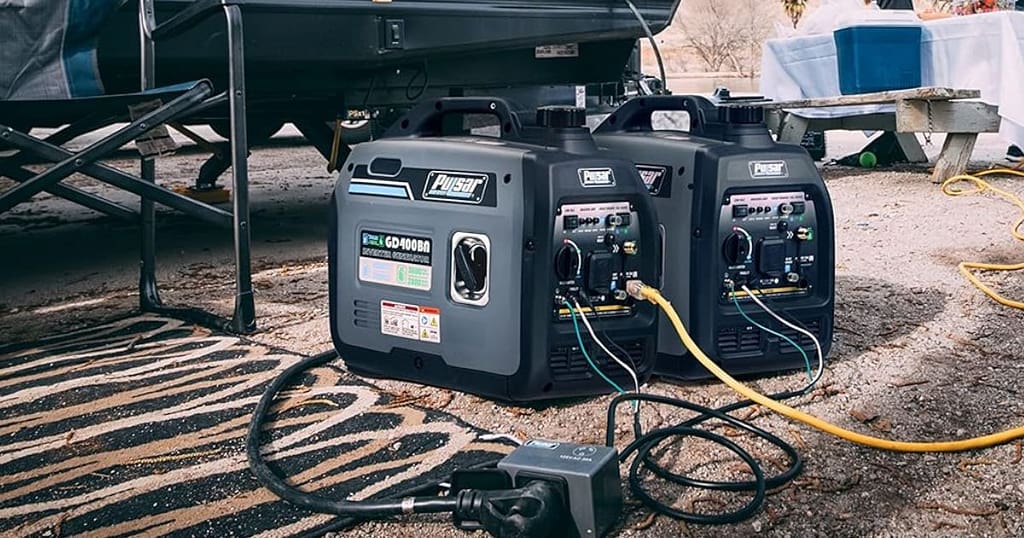

Three years ago, during a brutal winter storm, I learned a hard lesson about generators. As the temperature dropped below freezing and our house went dark, I proudly fired up my new 2500-watt generator. For six hours, it hummed along, powering our fridge, some lights, and charging our phones. Then, around 2 AM—it sputtered and died. I’d run out of gas.
That night cost us hundreds in spoiled food, a sleepless night, and a serious reality check. The manufacturer claimed “8 hours at 50% load.” Why did I get barely six?
That question started a two-year obsession. I spoke with electricians, RV mechanics, campground managers, and fellow homeowners. I tested fuels, tracked consumption with spreadsheets, and experimented with every tip I could find. What follows is everything I wish I’d known that first night, explained simply but thoroughly.
Part 1: Understanding Your Generator’s “Appetite”
The One Number That Matters Most: Watts
Think of watts as “how hard your generator is working.” Every device asks for a certain number of watts:
- LED light bulb: 10 watts
- Modern fridge: 150 watts (but needs 600 to START)
- Phone charger: 5-10 watts
- Window AC unit: 1,000 watts
- Microwave: 1,200 watts
The Simple Rule: The more watts you use, the faster your generator drinks fuel.
Why Your Fridge is a “Power Pig”
This was my biggest “aha” moment. Appliances with motors (fridges, air conditioners, pumps) need a POWER SURGE to start up—often 3-4 times their normal running wattage.
Real example: My fridge says “150 watts” on the label, but when its compressor kicks on, it briefly needs 600 watts. Every time this happens, your generator has to work extra hard, burning extra fuel.
Part 2: The Three Fuel-Saving Superpowers
Superpower #1: Eco Mode (Your Best Friend)
What it actually does: When you press the Eco button, your generator becomes “smart.” Instead of running full-speed all the time, it slows down when you’re using little power, then speeds up when you need more.
My Test Results:
- Eco Mode OFF: Running just lights and phones (400 watts total) = 5 hours runtime
- Eco Mode ON: Same 400 watts = 8+ hours runtime
- That’s a 60% improvement!
The Trade-Off: When the fridge kicks on, there’s a half-second lag. The lights might dim briefly while the engine speeds up. This is normal and harmless for most devices.
Pro Tip: If you’re running sensitive electronics (like a fancy computer or medical equipment), plug them into a small UPS battery backup (the kind you use for computers). This smooths out the brief power dip.
Superpower #2: The Right Fuel
Gasoline isn’t just gasoline. Most gas stations sell “E10” gasoline—that’s 10% ethanol (corn alcohol). Here’s the problem with ethanol:
- It attracts water from the air, which can gunk up your generator
- It has less energy than pure gasoline
- It goes bad faster (in as little as 30 days)
My 6-Month Fuel Test:
- Regular E10 gasoline: 6.5 hours runtime
- Premium NON-ethanol gasoline: 7.3 hours runtime (12% improvement!)
- Premium gas with fuel stabilizer: 7.6 hours
Where to find it: Many marinas, some premium gas stations, and farm supply stores sell ethanol-free gas. Websites like Pure-Gas.org can help you locate it.
If you can’t find ethanol-free: Use a fuel stabilizer like STA-BIL every time you fill your gas can. It helps prevent the gas from breaking down.
Superpower #3: Load Management
This is about being smart about WHAT you plug in and WHEN.
The Wrong Way: Start generator → Plug in everything at once → Leave it all running
The Right Way: Start generator → Add items one by one → Turn off what you don’t NEED
My Evening Routine During an Outage:
- 6 PM: Start generator, plug in fridge
- 6:15 PM: Plug in router and one living room light
- 7-9 PM: Plug in TV for evening news, then unplug
- 9 PM: Charge all phones and laptops (takes 1-2 hours)
- 10 PM: Unplug everything except fridge and one nightlight
- 10:15 PM: Switch to battery-powered lights, turn generator OFF until morning
This careful approach doubled my effective runtime compared to just leaving everything running.
Part 3: Medium Projects with Big Payoffs
The Auxiliary Tank Setup (My #1 Upgrade)
Cost: $50-150
Time: 30 minutes to set up
Payoff: 24+ hours of continuous runtime
How it works: You connect a larger external gas tank to your generator’s small built-in tank. Fuel flows automatically by gravity.
Safety-First Setup:
- Buy a 5-gallon utility tank (the kind for lawn tractors)
- Get proper fuel line from an auto parts store
- Install an automatic shutoff valve
- Place the extra tank LOWER than your generator (on the ground next to it)
- Keep everything outside, away from windows
Why this works: Instead of refilling your generator’s 1-gallon tank every 6 hours, you only need to check the 5-gallon tank once a day. During Hurricane Ida, this let me sleep through the night without worrying about fuel.
The Propane Option
Many modern generators can run on propane with a simple conversion kit ($50-100).
Gasoline vs. Propane:
- Gasoline: More power per gallon, but goes bad in 3-6 months
- Propane: Less power per gallon, but stores for 10+ years safely
My Experience:
- On gasoline: 7 hours per tank
- On propane: 5.5 hours per 20lb tank (like a grill tank)
- But I can store 5 propane tanks in my shed with no worries! also read our blog about Inverter Generator Running Costs: Gas vs. Propane vs. Solar
Propane is especially good if you:
- Live in an area with few power outages
- Want minimal maintenance
- Need to store fuel long-term
Keep It Cool
Generators are like athletes—they perform better when they’re not overheating.
The Problem: On a 95°F day in direct sun, my generator’s runtime dropped by 30 minutes compared to a 70°F day in shade.
The Solution:
- Place your generator in full shade
- Ensure 3 feet of clear space on all sides for airflow
- Never put it in a closed shed or garage (carbon monoxide danger!)
- Consider a simple sun shade (like a beach umbrella clamped to a pole)
Part 4: The Genius Combo—Generator + Battery
This is the modern solution that changed everything for me. Also, read Lead Acid vs Lithium vs AGM Batteries – Pros and Cons in 2026.
How the “Hybrid System” Works:
The Pieces:
- Your gas/propane generator
- A portable power station (like Jackery, EcoFlow, or Bluetti—basically a big battery with outlets)
- Maybe some solar panels
The Daily Cycle:
- Morning (8 AM): Start generator for 2 hours
- Powers the fridge directly
- Recharges the power station to 100%
- Day (10 AM – 8 PM): Generator OFF
- Run lights, phones, router from the silent battery
- Evening (8 PM): Quick 1-hour generator run
- Cook dinner (if using electric hotplate)
- Top up the battery
- Night (9 PM – Morning): Generator OFF
- Run fridge and essentials from battery
- Sleep in complete silence
The Results:
- Generator runtime: 3 hours/day instead of 24
- Fuel consumption: 75% less
- Noise: Only during daytime hours
- Comfort: Continuous power with silent nights
Cost: A good 1000-watt-hour power station costs $800-1,200. It pays for itself in fuel savings after 2-3 prolonged outages.
Part 5: Maintenance That Actually Matters
The Pre-Storm Checklist (20 Minutes, Twice a Year):
- Change the oil (dirty oil makes engine work harder)
- Clean/replace air filter (a dirty filter can increase fuel use by 10%)
- Add fuel stabilizer to fresh gas
- Test start and run for 10 minutes
The Storage Routine (When Storm Season Ends):
- Run the generator until it’s out of gas OR add fuel stabilizer and run for 10 minutes
- Change the oil (acidic used oil can damage engine over winter)
- Remove spark plug, add a teaspoon of oil to the cylinder, pull start cord slowly, replace plug
- Store in a dry place with the fuel valve OFF
Part 6: What NOT to Do (Mistakes I Made)
- Don’t store gas in milk jugs or water bottles (they degrade and leak)
- Don’t “top off” your generator while it’s running (fire risk)
- Don’t place generator near windows or air intakes (carbon monoxide)
- Don’t run cords under rugs or through standing water
- Don’t ignore the first sputter—that’s your 5-minute warning to refuel
My Personal System Today
After all my testing, here’s what works for my family:
For short outages (under 12 hours):
- Ethanol-free gas with stabilizer
- Eco mode ON
- Careful load management
- Runtime: 12+ hours
For long outages (days):
- Main generator with 5-gallon auxiliary tank
- 1500-watt power station for nighttime
- 200-watt solar panel to trickle-charge during day
- Runtime: Effectively unlimited with 1-hour daily generator use
Fuel storage:
- 10 gallons ethanol-free gas (rotated every 6 months)
- 2x 20lb propane tanks
- All stored in detached shed in proper containers
The Most Important Lesson
The biggest fuel saver isn’t a gadget or hack—it’s changing what you power.
During our first outage, we tried to live normally: TV on, multiple rooms lit, charging everything constantly. Now we practice “outage mode”:
- One room lit at a time
- All devices charged to 100%, then unplugged
- Meals planned to minimize fridge opening
- Battery-powered radios and lights for evening
This mindset shift, more than any technical upgrade, gave us the most runtime improvement.
Start Simple
If this feels overwhelming, just do these THREE things:
- Press the ECO button on your generator
- Buy ethanol-free gas next time
- Unplug one thing you don’t absolutely need
You’ll immediately get more runtime. From there, you can explore auxiliary tanks, battery combos, or propane conversions as your needs and budget allow.
The goal isn’t to become a generator expert—it’s to sleep peacefully through the next storm, knowing your lights will still be on in the morning.