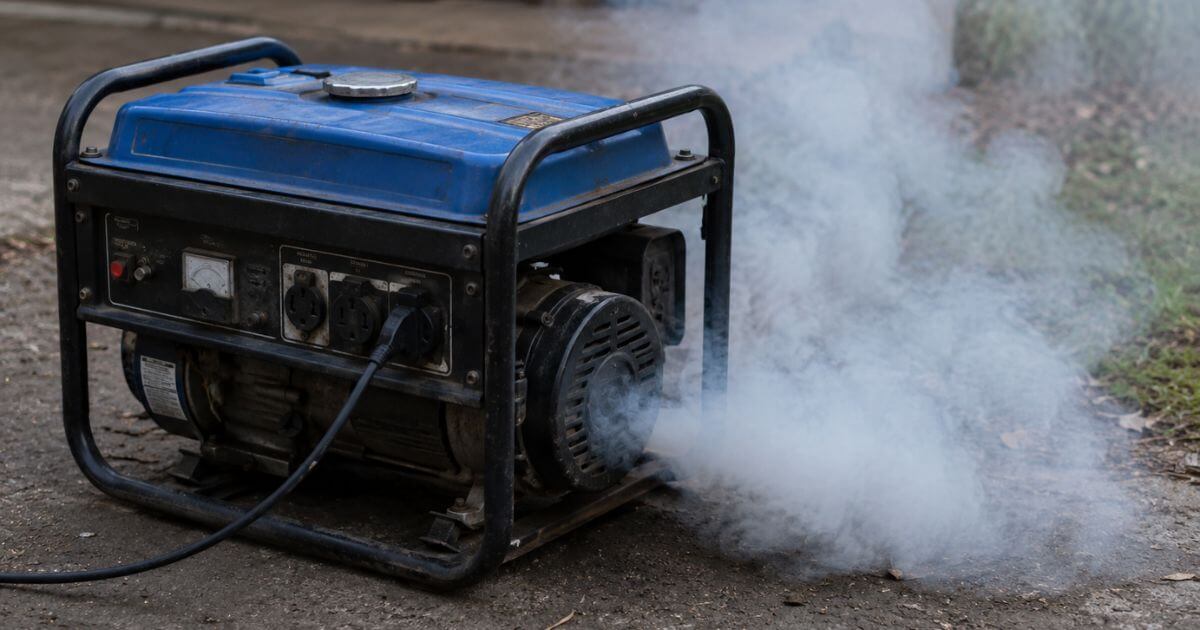
Generator Smoking (Black, Blue, or White Smoke)
A generator should produce clean exhaust that is mostly invisible once the engine has warmed up. If you notice black, blue, or white smoke coming from the exhaust, it usually means something is wrong with the engine, fuel system, or internal components. While some light white vapor may be normal for a few minutes during a cold start, thick or continuous smoke is a warning sign that should never be ignored.
The color of the smoke provides valuable clues about the underlying problem. Black smoke often points to excessive fuel or restricted airflow, blue smoke usually indicates that the engine is burning oil, and white smoke can be caused by moisture, unburned fuel, or more serious engine issues. Identifying the smoke color is the first step toward finding the right solution and preventing costly damage.
In this guide, you’ll learn what each type of generator smoke means, the most common causes, how to diagnose the problem safely, practical repair methods, and maintenance tips to keep your generator running reliably for years.
What Does Generator Smoke Mean?
The exhaust coming from a generator is a direct indicator of how well the engine is operating. Under normal conditions, a properly maintained generator should produce little to no visible smoke once it reaches its normal operating temperature. If you notice continuous black, blue, or white smoke, it usually means the engine is not burning fuel efficiently or another mechanical problem has developed.
Smoke is essentially a byproduct of combustion. When the air-fuel mixture, engine oil, or internal engine components are not functioning as they should, the exhaust changes color. Each smoke color points to a different type of issue, making it an important diagnostic clue.
Here is what each smoke color generally indicates:
- Black smoke – The engine is burning too much fuel or not getting enough air, resulting in incomplete combustion.
- Blue smoke – Engine oil is entering the combustion chamber and burning along with the fuel. This often indicates engine wear or an oil-related problem.
- White smoke – This may be caused by condensation during a cold start, unburned fuel, or, in some cases, a more serious engine issue that requires inspection.
Is It Normal for a Generator to Smoke?
A small amount of light white vapor during the first few minutes after starting a cold generator is usually normal, especially in cool or humid weather. This is often just water vapor that disappears as the engine warms up. Also read our blog Generator Overheating.
However, the following situations are not normal and should be investigated immediately:
- Thick black, blue, or white smoke that continues after the engine has warmed up.
- Smoke accompanied by rough running, loss of power, or unusual engine noises.
- A strong smell of burning oil or raw fuel.
- Smoke that becomes heavier when the generator is placed under load.
Ignoring persistent smoke can lead to reduced performance, increased fuel consumption, engine overheating, and expensive repairs. Identifying the smoke color early and addressing the underlying cause can help prevent further damage and keep your generator operating safely and efficiently.
Black Generator Smoke: Causes, Symptoms, and How to Fix It
Black smoke is one of the most common types of generator exhaust problems. It usually means the engine is burning too much fuel or not getting enough air to complete the combustion process. When this happens, some of the fuel remains only partially burned, creating black soot that exits through the exhaust.
If black smoke appears only for a second or two during startup, it may not be a cause for concern. However, continuous black smoke while the generator is running indicates a problem that should be diagnosed and repaired.
Common Symptoms of Black Smoke
In addition to dark exhaust, you may notice one or more of the following symptoms:
- Reduced engine power
- Higher than normal fuel consumption
- Rough or uneven engine operation
- Strong smell of gasoline or diesel in the exhaust
- Black soot around the exhaust outlet
- Difficulty maintaining power under heavy loads
What Causes Black Smoke?
1. Dirty or Clogged Air Filter
A clogged air filter restricts the amount of air entering the engine. Since there isn’t enough oxygen to burn all the fuel, the engine runs “rich,” producing black smoke.
How to fix it:
- Remove and inspect the air filter.
- Clean it if it is reusable and only lightly dirty.
- Replace it if it is heavily clogged, damaged, or soaked with oil.
- Follow the manufacturer’s recommended maintenance schedule.
2. Overloaded Generator
Connecting appliances that exceed the generator’s rated output forces the engine to work harder than designed. This can lead to incomplete fuel combustion and black exhaust smoke.
How to fix it:
- Disconnect unnecessary electrical loads.
- Calculate the total running and starting wattage of connected appliances.
- Keep the generator operating within its rated capacity.
- If you frequently need more power, consider upgrading to a higher-capacity generator.
3. Carburetor Problems (Gasoline Generators)
A carburetor mixes air and fuel before they enter the engine. If it becomes dirty, damaged, or incorrectly adjusted, it may deliver too much fuel, creating a rich mixture that produces black smoke.
How to fix it:
- Clean the carburetor using an approved carburetor cleaner.
- Inspect jets and passages for dirt or varnish.
- Replace worn or damaged carburetor components.
- Adjust the carburetor according to the manufacturer’s specifications.
4. Faulty Fuel Injector (Diesel Generators)
Diesel generators rely on fuel injectors to deliver the correct amount of fuel. A clogged, leaking, or worn injector can inject excessive fuel, resulting in black smoke.
How to fix it:
- Inspect the fuel injectors for wear or leakage.
- Clean injectors if recommended by the manufacturer.
- Replace defective injectors when necessary.
- Have injection timing checked if the problem persists.
5. Poor Fuel Quality
Old, contaminated, or low-quality fuel does not burn efficiently and can lead to excessive smoke, rough operation, and carbon buildup.
How to fix it:
- Drain stale fuel from the tank if it has been stored for too long.
- Refill with fresh, clean fuel that meets the generator manufacturer’s specifications.
- Use a fuel stabilizer if the generator will be stored for an extended period.
6. Restricted Exhaust System
A partially blocked muffler or spark arrestor can reduce exhaust flow, affecting engine performance and contributing to black smoke.
How to fix it:
- Inspect the muffler and spark arrestor for carbon buildup.
- Clean or replace blocked components.
- Ensure the exhaust system is free from debris or damage.
Can You Continue Running a Generator That Produces Black Smoke?
It is not recommended to keep using a generator that continuously emits black smoke. Although the engine may continue running, prolonged operation can lead to:
- Increased carbon deposits inside the engine
- Fouled spark plugs
- Reduced fuel efficiency
- Loss of engine performance
- Potential long-term engine damage
Stopping the generator and correcting the underlying problem as soon as possible is the safest way to prevent more expensive repairs.
Blue Generator Smoke: Causes, Symptoms, and How to Fix It
Blue smoke from a generator is usually a sign that engine oil is entering the combustion chamber and burning along with the fuel. Unlike black smoke, which is mainly related to the air-fuel mixture, blue smoke almost always points to an oil-related problem. If the smoke continues after the generator has warmed up, it should be inspected as soon as possible to prevent further engine damage.
In some cases, a small puff of blue smoke may appear when starting a generator that has been stored on its side or transported incorrectly. This can happen because a small amount of oil has entered the cylinder. However, continuous blue smoke is not normal and requires attention.
Common Symptoms of Blue Smoke
Along with blue-colored exhaust, you may notice the following symptoms:
- Engine oil level drops faster than normal.
- A noticeable smell of burning oil.
- Reduced engine performance.
- Oil residue around the exhaust outlet.
- Frequent need to add engine oil.
- Increased carbon deposits on the spark plug.
What Causes Blue Smoke?
1. Overfilled Engine Oil
Adding too much oil is one of the most common and easiest-to-fix causes of blue smoke. Excess oil can be forced past seals or piston rings into the combustion chamber, where it burns during engine operation.
How to fix it:
- You should turn off the generator for sometime and let the engine cool.
- Check the oil level using the dipstick.
- If the oil is above the maximum mark, drain the excess until it reaches the recommended level.
- Restart the generator and check if the smoke disappears.
2. Worn Piston Rings
Piston rings create a seal between the piston and the cylinder wall. As they wear over time, engine oil can leak into the combustion chamber and burn, producing blue smoke.
How to fix it:
- Perform a compression test to check engine condition.
- Replace worn piston rings if excessive wear is confirmed.
- This repair usually requires partial engine disassembly and may be best handled by a qualified technician.
3. Worn Valve Seals or Valve Guides
Valve seals prevent oil from leaking into the combustion chamber through the valves. When these seals wear out or become brittle with age, oil can seep into the cylinder and burn.
How to fix it:
- Inspect valve seals for wear or damage.
- Replace worn valve seals or valve guides.
- Verify proper valve clearance after reassembly if required by the manufacturer.
4. Incorrect Generator Storage or Transportation
Portable generators should remain upright during storage and transport. Tilting the generator excessively can allow engine oil to move into areas where it does not belong, causing temporary blue smoke when the engine is started.
How to fix it:
- Place the generator on a level surface.
- Allow it to sit upright for several hours before restarting.
- Check the engine oil level and correct it if necessary.
- If the smoke disappears after a short time, no further repairs may be needed.
5. Excessive Engine Wear
Generators with many operating hours may develop worn internal engine components that allow oil to enter the combustion chamber. This is more common in older machines that have not received regular maintenance.
How to fix it:
- Check engine compression and inspect internal components.
- Replace worn parts as needed.
- If repair costs are very high, replacing the generator may be the more economical option.
Can You Continue Running a Generator That Produces Blue Smoke?
It is not advisable to continue using a generator that emits continuous blue smoke. Burning engine oil can lead to:
- Low engine oil levels and poor lubrication.
- Accelerated engine wear.
- Carbon buildup on valves and spark plugs.
- Reduced engine efficiency.
- Costly engine repairs if the problem is ignored.
If blue smoke continues after checking the oil level and ensuring the generator is upright, stop using the generator until the cause has been identified and repaired.
White Generator Smoke: Causes, Symptoms, and How to Fix It
White smoke can be confusing because it is not always a sign of a serious problem. In many cases, a small amount of thin white vapor is completely normal when starting a generator in cold or humid weather. This is simply condensation turning into steam and usually disappears within a few minutes as the engine reaches its operating temperature.
However, thick, dense, or continuous white smoke that persists after the engine has warmed up is not normal. It often indicates that fuel is not burning properly or that the engine has developed a mechanical issue requiring inspection.
Common Symptoms of White Smoke
Besides white exhaust smoke, you may notice:
- Hard starting or repeated starting attempts.
- Rough engine idle.
- Engine misfiring or hesitation.
- Strong smell of unburned fuel.
- Reduced power output.
- Smoke that continues even after the generator has warmed up.
What Causes White Smoke?
1. Condensation During Cold Starts
When a generator is started in cool or humid conditions, moisture inside the exhaust system turns into steam. This produces a light white vapor that disappears as the exhaust heats up.
How to fix it:
- Allow the generator to warm up for several minutes.
- If the white vapor disappears, no repair is necessary.
2. Unburned Fuel
If fuel is entering the combustion chamber but not burning completely, it may leave the exhaust as thick white smoke. This can happen because of ignition problems, poor fuel quality, or incorrect fuel delivery.
How to fix it:
- Replace old or contaminated fuel with fresh fuel.
- Inspect the spark plug on gasoline generators and replace it if worn.
- Check the fuel system for restrictions or leaks.
- Make sure the choke is fully open after the engine warms up.
3. Water-Contaminated Fuel
Water mixed with gasoline or diesel can prevent proper combustion, resulting in white smoke, rough engine operation, and difficulty starting.
How to fix it:
- Drain the contaminated fuel from the tank.
- Clean the fuel tank if necessary.
- Refill with fresh, clean fuel from a reliable source.
- Replace the fuel filter if contamination is severe.
4. Incorrect Fuel Injection Timing (Diesel Generators)
In diesel generators, fuel must be injected at precisely the right time. Incorrect injection timing can prevent complete combustion and produce persistent white smoke.
How to fix it:
- Inspect the fuel injection system.
- Adjust injection timing according to the manufacturer’s specifications.
- Have the system serviced by a qualified technician if specialized tools are required.
5. Low Engine Temperature
Generators that never reach their normal operating temperature may burn fuel inefficiently, producing light white smoke.
How to fix it:
- Allow the generator to warm up before applying heavy electrical loads.
- Avoid running the generator for only a few minutes at a time whenever possible.
- Follow the manufacturer’s recommended operating procedures.
6. Internal Engine Problems
Persistent white smoke that does not disappear after warming up may indicate worn engine components or other internal mechanical issues affecting combustion.
How to fix it:
- Check engine compression if poor performance accompanies the smoke.
- Inspect internal engine components for wear.
- Seek professional repair if internal damage is suspected.
When Is White Smoke Normal?
White smoke is generally considered normal only when:
- It appears briefly during a cold start.
- It is thin and resembles steam rather than thick smoke.
- It disappears completely after the engine reaches operating temperature.
- The generator runs smoothly without losing power.
If the smoke remains visible, becomes thicker, or is accompanied by hard starting, rough running, unusual noises, or loss of power, the generator should be inspected before further use. Early diagnosis can prevent more serious engine damage and help restore reliable performance.
How to Prevent Generator Smoke
Most generator smoking problems can be prevented with a few simple maintenance habits. Keeping your generator in good condition not only reduces smoke but also improves performance and extends engine life.
- Use fresh, clean fuel. Stale or contaminated fuel can cause incomplete combustion and excessive exhaust smoke.
- Check the engine oil before every use. Maintain the correct oil level and use the oil grade recommended by the manufacturer.
- Keep the air filter clean. A dirty air filter restricts airflow, causing the engine to run rich and produce black smoke.
- Avoid overloading the generator. Stay within the generator’s rated wattage to prevent excessive engine strain.
- Run the generator regularly. Operating it for 20–30 minutes every month helps keep the fuel system clean and lubricates internal engine parts.
- Inspect the exhaust and fuel system. Replace damaged hoses, clogged filters, or worn components before they lead to larger problems.
- Follow the maintenance schedule. Changing the oil, replacing filters, and inspecting spark plugs or fuel injectors at the recommended intervals can prevent most smoke-related issues.
Taking these simple preventive steps can help your generator run cleaner, consume fuel more efficiently, and reduce the risk of unexpected breakdowns.
Conclusion
Black, blue, and white smoke are clear warning signs that your generator needs attention. While a small amount of white vapor during a cold start can be normal, persistent smoke of any color usually indicates an issue with the fuel system, engine oil, airflow, or internal engine components. Identifying the smoke color is the first step toward diagnosing the problem and applying the correct fix.
Regular maintenance, using clean fuel, checking the oil level, and replacing worn parts on time can prevent most smoking issues before they become serious. If your generator continues to produce heavy smoke after basic troubleshooting, stop using it and inspect the unit or seek professional service. Addressing the problem early will help protect your generator, improve its performance, and extend its service life.