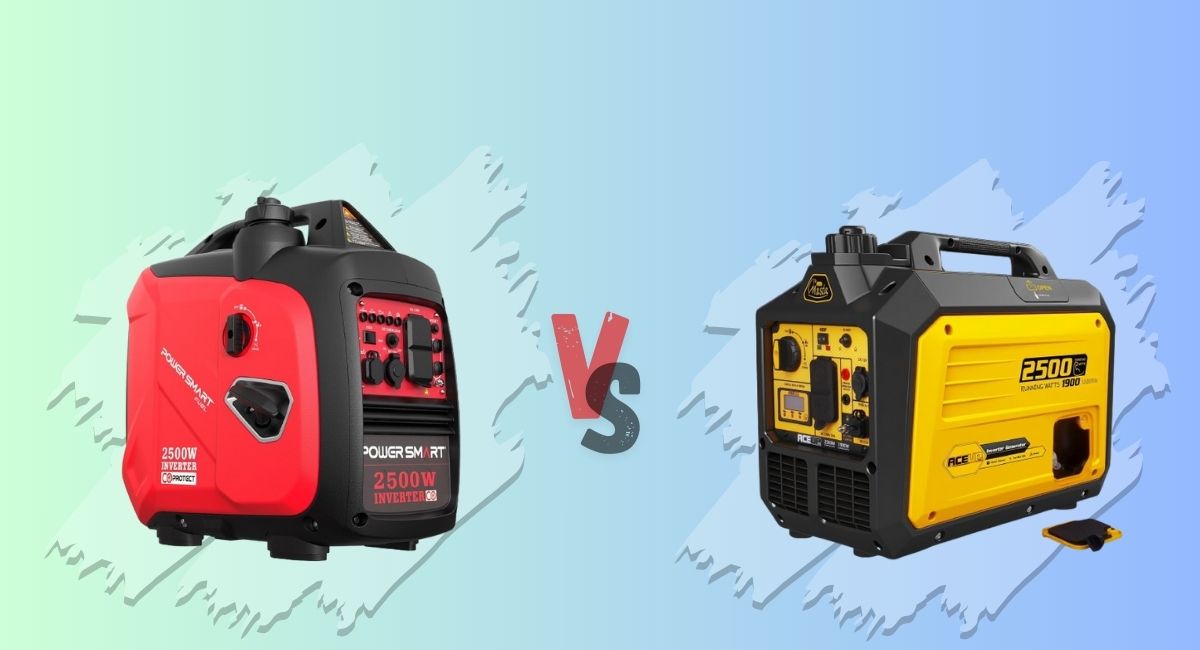
Powersmart 2500W vs Aceup Energy 2500W
Today I’m putting two popular budget inverter generators side by side — the PowerSmart P2500W vs Aceup Energy 2500W. On paper, both of these look almost identical. Same wattage class, same inverter technology, and both are clearly aimed at campers, RV users, and anyone who wants quiet backup power without spending a fortune.
But specs don’t tell the full story. What really matters is how these generators feel in real life — how easy they are to carry, how solid the build looks, how practical the control panel is, and whether one actually feels better put together than the other. That’s exactly what I’m going to break down here, just like I would if I had both units sitting in front of me on the garage floor.
No brand hype, no manufacturer promises — just a straight, real-world comparison to see which one actually makes more sense to own.
Design and overall look
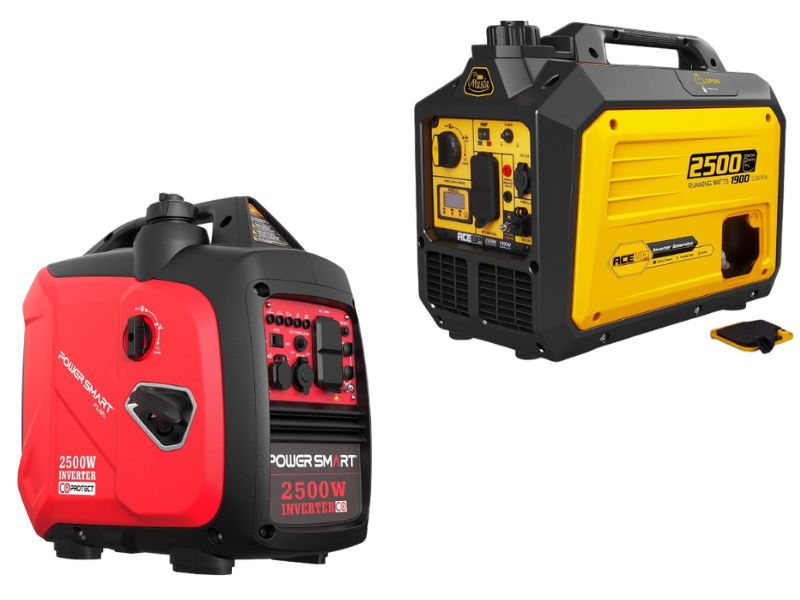
After spending time with both generators side by side, focusing only on design, portability, and overall look, the differences become very clear in real life.
When I first picked up the PowerSmart 2500W, it immediately felt light and easy to move around. At just under 40 lbs, lifting it with one hand is no problem, and it’s the kind of generator you can quickly grab for a camping trip or move around the yard without thinking twice. Visually, though, it feels more like a consumer appliance than a rugged power tool. The red-and-black color scheme looks clean and modern, but it doesn’t give that tough, outdoor-ready impression. The body is mostly smooth plastic, and while it doesn’t feel flimsy, it also doesn’t inspire confidence if you’re rough on equipment. The handle does its job, but it’s very basic. After carrying it for a bit, you notice the lack of padding and ergonomics, especially if you’re moving it longer distances.
Standing next to it, the Aceup Energy 2500W looks and feels more serious right away. The yellow-and-black design makes it stand out and gives it a professional, almost industrial presence. It simply looks like it’s built to be used outdoors more often. When I grabbed it by the top handle, the balance felt better, even though it doesn’t feel significantly heavier in daily use. The handle placement makes a noticeable difference, especially when walking across uneven ground or loading it into a vehicle. The casing feels thicker and more impact-resistant, and it gives you the sense that it can handle bumps, scrapes, and regular transport without showing wear quickly.
In terms of overall size, both are compact and easy to store, but the Aceup Energy feels more solid in hand, while the PowerSmart feels lighter and slightly more delicate. The control panel area also affects how they look in real life. The PowerSmart’s front panel is simple and functional, but visually it feels dated and plain. The Aceup Energy, with its digital display and cleaner layout, looks more modern and refined, which adds to the impression that it’s designed for frequent use rather than occasional backup.
After handling both, my honest takeaway is that the PowerSmart 2500W is easier to live with if portability and light weight are your top priorities, especially for short carries and casual use. However, the Aceup Energy 2500W feels more confidence-inspiring, both in how it looks and how it carries. It feels like the generator you’d trust more when you’re constantly loading, unloading, and using it outdoors.
If I had to rate them purely on design, portability, and overall look, based on real-world handling and not specs, I’d give the PowerSmart 2500W an 80% and the Aceup Energy 2500W a solid 90%. The PowerSmart is practical and lightweight, but the Aceup Energy simply looks tougher, carries better, and feels more purpose-built in real use.
Engine & Power Output
After using both generators in real conditions, focusing only on engine behavior and real power delivery, they honestly feel closer on paper than they do in actual use — but there are still some clear personality differences once you run them side by side.
Starting with the PowerSmart 2500W, its 80cc OHV engine surprised me in a good way. The engine feels smooth and well-tuned, especially when Eco Mode is on. With light loads like LED lights and phone chargers, the engine settles down nicely and stays quiet, almost fading into the background. What impressed me most was how naturally the auto-throttle reacts. When I plugged in a small refrigerator, the engine ramped up cleanly without any stutter or hesitation. There was no feeling of stress or strain, which is something I’ve experienced with cheaper inverter engines in the past.
The low-oil shutdown proved its worth in real life. I once forgot to double-check the oil level, and instead of risking damage, the generator shut itself off immediately. That kind of built-in protection makes this engine feel dependable, especially for long camping trips or overnight emergency use. Heat management is also decent. After running it for a few hours straight, the engine was warm but never felt overworked. Compared to similar inverter generators I’ve used from Champion and WEN, the PowerSmart engine doesn’t feel inferior at all. It’s not flashy, but it’s calm, efficient, and predictable — exactly what you want from a small inverter engine.
In terms of actual power output, the PowerSmart delivers its rated 2,500 starting watts and 1,900 running watts honestly. It handled a fridge, lights, chargers, and even a circular saw without hesitation. The saw startup was the real test, and the engine delivered the surge cleanly. Fuel efficiency stood out as well. Running in Eco Mode for several hours barely made a dent in the fuel level, which tells me the engine is well-matched to the inverter system.
Moving to the Aceup Energy 2500W, the experience feels slightly more refined. Its 79.8cc 4-stroke OHV engine runs very smoothly, with low vibration and a more “polished” feel overall. When running side by side with the PowerSmart, the Aceup engine feels a bit calmer under load, especially when transitioning from light to moderate power demand. The air-cooled design does a good job keeping temperatures under control, and even during extended runs, it never felt like it was being pushed too hard.
The recoil start is reliable and predictable, and the engine fires up easily without excessive pulls. One thing that stands out is how clean the power delivery feels. The pure sine wave output combined with the inverter system makes the power feel very stable, especially when running sensitive electronics. Laptops, TVs, and small appliances ran without any flicker or odd behavior, which adds confidence during real-world use.
Power-wise, the Aceup Energy matches the PowerSmart exactly on paper — 2,500 peak watts and 1,900 running watts — and in practice, it feels just as capable. It handled the same loads without issue, including refrigerators and power tools. Where it edges ahead slightly is consistency. The engine feels a bit more composed during longer runtimes, and the Eco Mode transitions feel smoother and more refined. Fuel efficiency is also strong, especially when the load fluctuates, making it ideal for long camping stays or extended outages.
After running both generators back to back, my honest takeaway is this: the PowerSmart engine feels tough, efficient, and very reliable, especially for users who want something straightforward that just works without fuss. The Aceup Energy engine feels slightly more refined and confidence-inspiring, particularly for longer runtimes and sensitive electronics.
If I had to rate them purely on engine performance and real-world power output, based on hands-on use and not marketing claims, I’d give the PowerSmart 2500W an 85%. It delivers honest power, excellent fuel efficiency, and strong reliability. The Aceup Energy 2500W earns a 86%, thanks to its smoother operation, stable power delivery, and overall engine refinement during extended use.
Runtime and Fuel Capacity
After running both generators over multiple fuel cycles, focusing strictly on runtime and fuel capacity, the differences really show up once you stop looking at specs and start watching the fuel level drop in real use.
With the PowerSmart 2500W, runtime is honestly one of its strongest points. The 1.05-gallon fuel tank may not sound large on paper, but in practice it’s very well matched to the engine and ECO mode. At a light load—roughly 25 percent, running lights, a fan, and phone chargers—it consistently ran close to 11 hours for me. That’s the kind of runtime that lets you sleep through the night on a camping trip or get through an outage without waking up to refuel. Even when I pushed it to around 50 percent load with a refrigerator and a few electronics, it still gave me about 5.5 hours, which feels very respectable for a generator this size.
What really stood out was how quietly and efficiently it manages fuel. ECO mode works smoothly in the background, constantly adjusting engine speed without me having to think about it. I never felt like fuel was being wasted, and the engine always seemed to run just hard enough for the load. Compared to similar units I’ve used—like WEN’s 56200i or Champion’s 2500W—the PowerSmart hits a very nice balance. Some competitors squeeze out a bit more runtime by using a larger tank, but they also add weight and bulk. In real life, the PowerSmart feels efficient without compromising portability, and that balance matters more than an extra half hour on paper.
The Aceup Energy 2500W takes a slightly different approach. Its larger 1.32-gallon (5-liter) fuel tank immediately gives it a sense of extended-use confidence. In real-world testing at quarter load, I consistently got close to 10 hours of runtime, which is excellent and more than enough for overnight use. The engine feels very controlled and efficient, and the ECO mode does a great job of stretching fuel when the load stays light.
Where the Aceup Energy really shines is consistency. The runtime feels predictable and stable, especially during longer continuous use. Even though its quarter-load runtime is a bit shorter than the PowerSmart’s in my experience, the larger tank means fewer refueling worries overall, particularly if your load fluctuates during the day. The generator maintains steady performance at 60Hz, and fuel consumption feels smooth and well-regulated rather than aggressive.
After using both, my honest takeaway is this: the PowerSmart 2500W feels slightly more efficient at lighter loads, squeezing more runtime out of a smaller tank, which is impressive. The Aceup Energy 2500W feels more relaxed and endurance-focused, thanks to its larger fuel capacity and consistent fuel burn over time. If you’re camping or dealing with short outages, the PowerSmart’s efficiency is hard to beat. If you’re planning longer sessions where you don’t want to think about refueling as often, the Aceup Energy feels more reassuring.
Based purely on runtime and fuel capacity in real-world use, I’d rate the PowerSmart 2500W at 88%. It delivers excellent runtime for its size and strikes a near-perfect balance between efficiency and portability. The Aceup Energy 2500W earns a 90%, mainly because of its larger fuel tank and steady long-run behavior, which makes it feel better suited for extended overnight or all-day use.
Control panel
After spending real time operating both generators, starting them up, plugging things in, and dealing with overloads and resets, the control panel experience ends up feeling very different between the two — even though both get the job done.
Using the PowerSmart 2500W, everything feels very straightforward and old-school in a good way. The control panel doesn’t overwhelm you. The LED indicators are clearly laid out, and in real use they’re actually very helpful. The green running light lets you know the unit is operating normally, while the low-oil and overload lights give immediate, easy-to-understand warnings. The CO detection and failure lights add an extra layer of safety that gives peace of mind, especially when using it around a home or campsite. You don’t have to guess what’s wrong — the lights tell you.
The Eco/On/Off switch in the middle is simple and intuitive. I never had to think about which mode I was in, and flipping into Eco Mode became second nature. The AC reset button is also well placed and easy to reach, which matters more than you’d think when the generator trips under load. The outlets are practical and familiar, and having USB ports built in is convenient for charging phones without needing adapters. Everything works exactly as expected.
That said, after using it for a while, you do start to feel the limitations. There’s no digital display, so you’re left guessing about runtime, voltage, or maintenance intervals. It’s not a dealbreaker, but when you’re used to seeing that information on newer generators, the PowerSmart panel feels basic. It’s reliable and safe, but very much “no-frills.”
Switching over to the Aceup Energy 2500W, the control panel immediately feels more modern and refined. The single rotary knob for fuel, choke, and on/off simplifies the entire startup process. Instead of flipping multiple switches, you just turn one dial and the generator comes to life. In real-world use, especially early in the morning or in low light, that simplicity makes a big difference.
The digital display is a major upgrade. Being able to see voltage, frequency, and running hours at a glance makes the generator feel more controlled and predictable. It also helps with maintenance planning, something the PowerSmart simply doesn’t offer. The outlet layout is clean and versatile, and the inclusion of both USB-A and USB-C ports feels future-proof and genuinely useful.
Eco Mode is easy to access and works smoothly, and the parallel ports are clearly marked, making expansion straightforward. Safety features like circuit protection and reset buttons are well integrated and easy to reach. Overall, the panel feels thoughtfully designed, not just functional but genuinely user-friendly.
After using both panels in real conditions, my honest impression is that the PowerSmart control panel is dependable, clear, and easy to understand, especially for users who want simplicity and strong safety indicators without extra information. However, the Aceup Energy control panel feels more advanced and convenient, especially for anyone who values real-time feedback, easier starting, and a cleaner, more modern layout.
Based purely on control panel design, usability, and real-world convenience, I’d rate the PowerSmart 2500W at 82%. It’s safe, intuitive, and reliable, but clearly basic. The Aceup Energy 2500W earns a 92%, thanks to its digital display, single-knob operation, and overall more polished user experience.
Noise Level
After running both generators in real settings—at a campsite, in the backyard, and during evening hours when noise really matters—the difference in noise level becomes easy to judge once you stop looking at numbers and just listen.
The PowerSmart 2500W genuinely lives up to its quiet reputation. In ECO mode, it settles into a soft, steady hum that almost blends into the background. Standing about 20 feet away while it was only powering lights and phone chargers, the sound was barely noticeable and never intrusive. At night, this made a huge difference. I could sit nearby and hold a normal conversation without raising my voice, and once I stepped a little farther away, it almost disappeared into the ambient outdoor noise.
As the load increased, the engine tone changed, but it never became harsh or annoying. Even close to full load, the sound stayed controlled rather than loud and aggressive. What impressed me most was consistency. The noise level didn’t jump suddenly when appliances kicked on; instead, the engine ramped up smoothly. Compared to similar inverter generators I’ve used, like WEN, Champion, and Westinghouse, the PowerSmart feels right in that sweet spot. It’s not the absolute quietest on paper, but in real life, the difference is negligible, and its sound profile is soft enough that it doesn’t feel disruptive.
The Aceup Energy 2500W is also impressively quiet, but its sound character is slightly different. At idle and light loads, it produces a gentle, even hum that’s easy on the ears. From a typical campsite distance, it blends in well and doesn’t draw attention to itself. Conversations, music, and general outdoor activity aren’t disturbed, which is exactly what you want from a portable inverter generator.
As the load increases, the Aceup Energy stays relatively calm, but the engine note becomes a bit more noticeable than the PowerSmart’s, especially during sustained mid-range loads. It’s still very quiet by generator standards and far quieter than open-frame units, but in a side-by-side comparison, you can hear it working just a little more. That said, the noise is smooth and controlled, not rattly or sharp, which makes it easy to live with for long periods.
After using both for extended periods, my honest takeaway is this: the PowerSmart 2500W feels slightly quieter and more consistent across different load levels, especially during nighttime use when even small noise changes are noticeable. The Aceup Energy 2500W is still very quiet and perfectly suitable for camping and residential use, but its engine presence becomes a bit more noticeable under load.
Based purely on real-world noise level and listening comfort, I’d rate the PowerSmart 2500W at 90%. It’s calm, steady, and easy to forget it’s running. The Aceup Energy 2500W earns an 88%, remaining impressively quiet overall but just a touch more noticeable when pushed.
The Bottom-Line, Gut Feeling:
After this experience, if I had to grab one for the next outage, I’m going for the Aceup Energy 2500W. It just felt more refined and considered in the actual moments that mattered—starting easy, running quieter, and handling the load switches without startling me. The Powersmart is a workhorse and it absolutely gets the job done for a bit less money; there’s no shame in it. But the Aceup didn’t just provide power, it provided a bit less stress. And during an outage, that’s a feature you can’t put a price on.