Why Does an RV AC Trip a Generator Even When the Wattage Is Sufficient?
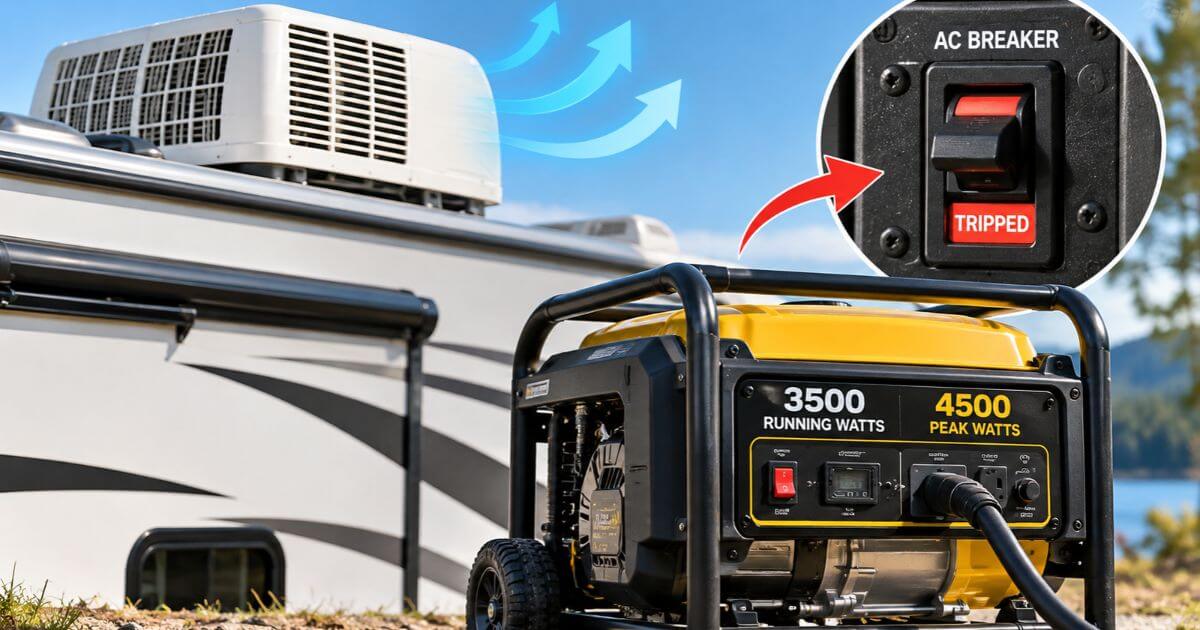
You check your generator’s wattage, compare it with your RV air conditioner’s power requirements, and everything seems compatible. Yet, when you switch on the air conditioner, the generator overload light comes on, the breaker trips, or the cooling system shuts down. Why Does an RV AC Trip a Generator?
This problem can be frustrating, especially during hot weather when you need reliable cooling.
The reason is that an RV air conditioner does not always draw the same amount of electricity. Its compressor may need a brief burst of extra power to start, and other equipment inside the RV can increase the generator’s total load. Voltage problems, short cycling, and electrical faults can also cause trouble.
The good news is that a few checks can help you narrow down the cause before you spend money on a larger generator or additional equipment.
1. The Generator Cannot Handle the Air Conditioner’s Starting Demand
One of the first things to investigate is the difference between running watts and starting watts.
Running watts describe the power an appliance needs during normal operation. Starting demand is the additional power required when a motor or compressor starts.
An RV air conditioner may operate within your generator’s continuous output rating but still require more power than the generator can provide during startup. Generator manufacturer Cummins explains that a motor’s starting demand can temporarily overload a generator even when the steady running load is below its rated capacity.
Consider this simplified example:
| Power requirement | Example value |
| Air conditioner’s running demand | 1,500W |
| Other appliances running together | 200W |
| Total running load | 1,700W |
| Example compressor startup demand | 2,400W |
These figures are illustrative, not specifications for every RV air conditioner.
If the compressor needs more starting power than the generator can deliver while supporting the existing load, the generator may enter overload protection or fail to start the compressor.
How to check: Look up the air conditioner’s electrical specifications and the generator’s continuous and surge ratings. Do not rely on the generator’s highest advertised wattage alone. Also check whether the manufacturer specifies any limits on how long surge power is available.
2. Other RV Appliances Are Using Power in the Background
Your air conditioner may not be the only device drawing electricity when the generator overloads.
An RV can have several less obvious electrical loads, including:
- A battery converter or charger replenishing the house batteries.
- A refrigerator operating in electric mode.
- An electric water heater.
- A microwave, coffee maker, or other kitchen appliance.
- Fans, televisions, lights, and other connected equipment.
These devices can consume part of the generator’s available output before the air conditioner starts.
For example, a generator may have enough power to operate an air conditioner by itself. However, if a battery charger and other appliances are already drawing electricity, the remaining capacity might not be enough for the compressor’s startup demand. Check our top best RV generators in 2026.
What to do
Switch off unnecessary appliances before starting the air conditioner. If your RV has an adjustable battery-charging rate, consult the charger or inverter manual to see whether reducing the charging load is supported.
Once the air conditioner is operating normally, add other appliances one at a time while staying within the generator’s rated limits.
If the problem disappears when other loads are removed, you may have a load-management issue rather than a generator that is simply too small.
3. The Air Conditioner Is Restarting Too Quickly
An air conditioner compressor needs time for pressure in its refrigeration system to equalize after it stops.
If the compressor is switched off and restarted too soon, it may struggle to start against the remaining pressure. This condition is known as short cycling.
It can cause the air conditioner to trip its breaker, trigger generator overload protection, or shut down because of its own thermal protection.
How to avoid this problem
After switching the air conditioner off, follow the restart interval specified by its manufacturer. If no more specific instructions apply, some RV systems require a delay of several minutes before the compressor can restart.
Avoid repeatedly switching the thermostat on and off to force the compressor to start.
If short cycling continues during normal thermostat operation, the problem may involve the controls, compressor, or another component that requires professional diagnosis.
4. The Generator Is Experiencing Low Voltage
An air conditioner can have trouble starting if the voltage supplied to it drops too far during startup.
This may happen when the generator is overloaded, the electrical connection has excessive resistance, or the extension cord is too long or undersized for the load.
The result can be a compressor that struggles to start, a protective shutdown, or an air conditioner that stops working even though the generator engine continues running.
What should you check?
First, remove unnecessary electrical loads and confirm that all external connections are properly rated for the current and voltage involved.
Check the RV air conditioner’s manual for its acceptable operating-voltage range. If the problem continues, have a qualified RV technician or electrician measure the voltage at the appropriate points under load.
Do not open electrical panels or attempt live electrical measurements unless you are qualified to perform them safely.
A generator with sufficient advertised wattage can still experience a voltage problem. Replacing it with a larger model will not necessarily fix a faulty connection or damaged component. Also, read our another blog on Generator AVR Problems Explained.
5. The Generator Is Operating in Hot Weather or at High Altitude
Environmental conditions can affect generator performance.
High ambient temperatures can increase the demands placed on cooling systems and electrical equipment. At higher elevations, lower air density can reduce the output of many combustion-engine generators unless the manufacturer specifies otherwise.
These conditions matter when a generator is already close to the air conditioner’s power requirements.
What to do
Check the generator manual for any output derating instructions related to altitude or temperature. Make sure the generator has the required ventilation and is operating within its specified environmental limits.
Keep it outdoors in a suitable location, following the manufacturer’s clearance and exhaust instructions. Never run a fuel-powered generator inside an RV, garage, or other enclosed space because of carbon monoxide danger.
If the generator works at lower elevations but struggles at a high campsite, check its applicable derating guidance before assuming that the air conditioner is faulty.
6. A Soft-Start Device May Help
Some RV air conditioners can use a compatible soft-start device to reduce the initial electrical demand of the compressor.
This can make it easier for a suitably rated generator to start the air conditioner without exceeding its available power.
However, a soft-start device does not increase the generator’s continuous wattage. It also cannot correct every problem, including defective compressors, low voltage caused by poor connections, or an excessive load from other appliances.
Before purchasing one, confirm that it is compatible with your exact air conditioner and installation. Follow the air conditioner and soft-start manufacturers’ instructions, and use a qualified installer when required.
If the generator is too small to support the air conditioner’s normal running load, a soft-start device will not solve that underlying limitation.
7. The Problem May Be a Faulty Breaker or Air Conditioner Component
If the generator continues to trip even after unnecessary appliances have been disconnected and the correct startup procedure has been followed, an electrical or mechanical fault may be responsible.
Possible causes include a worn or defective breaker, damaged wiring, a failing capacitor, compressor problems, or a generator that is not delivering the expected electrical output.
The location of the shutdown can provide a useful clue.
| What happens | Possible explanation |
| Generator displays an overload warning | Excessive load or a startup demand beyond its capability |
| RV air conditioner breaker trips | Possible branch-circuit overload or electrical fault |
| Generator runs, but the air conditioner will not start | Startup limitations, voltage problems, or an air conditioner fault |
| Air conditioner starts but shuts down later | Excessive combined load, voltage issues, overheating, or a component problem |
| Problem continues with other appliances disconnected | Compatibility issue or a fault requiring further diagnosis |
These symptoms are clues, not definitive diagnoses. The correct cause depends on the equipment and the conditions when the shutdown occurs.
Do not keep resetting a breaker that repeatedly trips. Stop using the affected equipment and arrange an inspection if the cause is not obvious. You must read our article on Generator Keeps Tripping the Breaker?
A Simple Troubleshooting Checklist
Before buying another generator, work through these checks:
- Confirm the specifications. Compare the air conditioner’s running and startup requirements with the generator’s continuous and surge ratings.
- Remove extra loads. Turn off unnecessary appliances and check whether the air conditioner starts.
- Allow the compressor to rest. Follow the manufacturer’s required restart interval.
- Check the connections. Look for visibly damaged cables, loose external plugs, or unsuitable extension cords. Disconnect power before inspecting accessible connections.
- Consider the conditions. Check for high-altitude output limits, excessive heat, and inadequate generator ventilation.
- Investigate repeated trips. If the problem persists, have the generator and air conditioner inspected by a qualified technician.
This process can help distinguish a power-capacity problem from a connection issue or equipment fault.
When Should You Consider a Different Generator?
A replacement generator may be appropriate if its continuous output is insufficient for the air conditioner and the other appliances you need to run.
When comparing models, pay attention to more than the advertised starting wattage. Check continuous output, surge capability, rated voltage, outlet configuration, and the air conditioner manufacturer’s generator requirements.
Also consider how you use your RV. Someone who needs only a single air conditioner may have different power requirements from someone who wants to run two air conditioners, a microwave, and a battery charger together.
An inverter generator can be a suitable option for RV use, but the correct choice depends on the complete electrical load rather than the generator type alone.
If you are comparing portable models, read our inverter generator reviews and check each model’s published specifications before deciding whether it suits your RV.
Final Thoughts: Why Does an RV AC Trip a Generator?
An RV air conditioner that trips a generator despite apparently sufficient wattage does not automatically mean you need a bigger generator.
The issue may be compressor startup demand, other appliances consuming power, short cycling, low voltage, environmental conditions, or a faulty component.
Start by checking the specifications and reducing the connected load. If the problem continues, have the electrical supply and air conditioner examined rather than repeatedly resetting breakers or replacing equipment without a diagnosis.
A compatible generator must provide enough continuous power for normal operation and enough temporary power for startup, while also supporting the other loads in your RV.
Frequently Asked Questions
Why does my RV air conditioner trip a 2,000-watt generator?
The air conditioner’s startup demand may exceed the generator’s available surge power, especially when other appliances are running. Some RV air conditioners also require more continuous power than a particular 2,000-watt model can supply. Check the exact specifications for both units.
Will a soft starter let my RV air conditioner run on a smaller generator?
It may reduce compressor startup demand when the air conditioner and soft starter are compatible. However, it does not increase the generator’s continuous output, and it cannot guarantee compatibility with a smaller generator.
Should I turn off the RV battery charger when running the air conditioner?
Reducing the battery-charging load may help if the charger is consuming power needed by the air conditioner. Only change the charging settings or disconnect equipment as permitted by the RV and charger manufacturers.
Why does the generator keep running after the RV air conditioner trips?
The air conditioner’s circuit breaker or internal protection may have stopped the cooling system without shutting down the generator. This can also occur when the generator continues supplying power but the air conditioner has a separate fault. Check which protective device activated rather than assuming that every shutdown has the same cause.
Can hot weather make an RV air conditioner harder to run?
High temperatures can affect equipment operating conditions and cooling performance. A generator may also have less available output under some environmental conditions. Check the specifications for both units and investigate other causes if the problem persists.