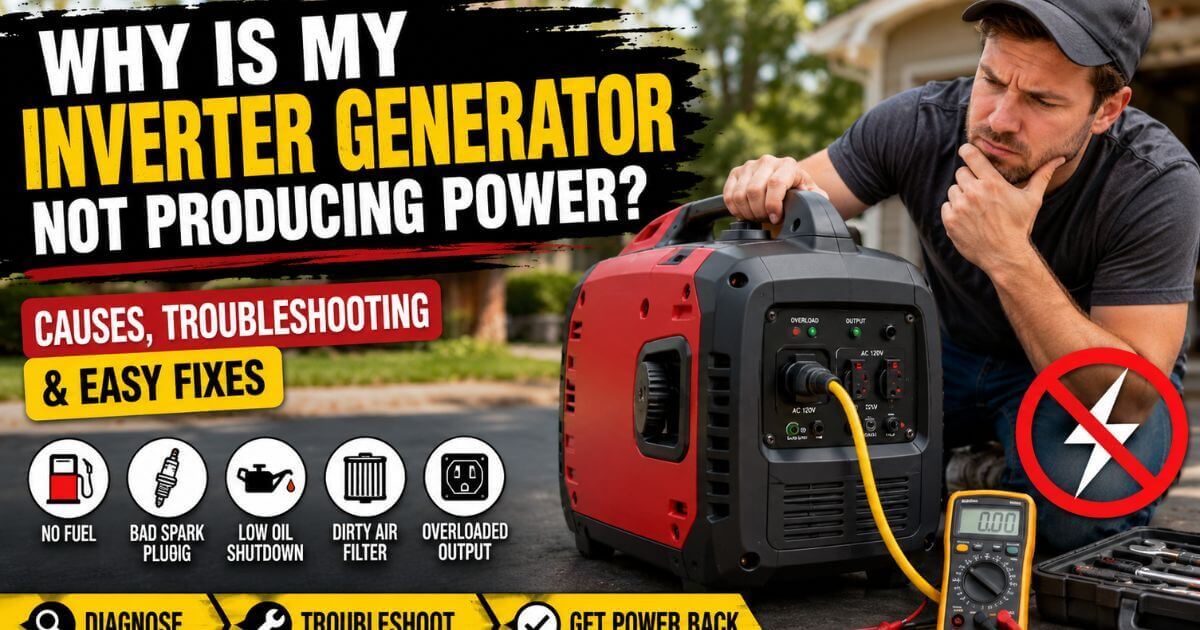
Why Is My Inverter Generator Not Producing Power? Causes, Troubleshooting & Easy Fixes
An inverter generator that starts but doesn’t produce power can be frustrating. The engine runs normally, but your appliances won’t turn on. This problem is more common than many people think.
The good news is that the cause is not always serious. A tripped breaker, overload protection, loose wire, or faulty outlet can stop the generator from supplying electricity. In some cases, the problem is inside the alternator or inverter module and may require repair.
This guide explains the most common reasons your inverter generator is not producing power. You’ll also learn how to diagnose the problem step by step and which fixes you can safely try before calling a technician to him about Why Is My Inverter Generator Not Producing Power.
How Does an Inverter Generator Produce Electricity?
Understanding the basic process makes troubleshooting much easier.
Unlike conventional generators, an inverter generator doesn’t send electricity directly from the alternator to your appliances. Instead, it goes through several stages to create clean, stable power.
The process looks like this:
- The gasoline engine turns the alternator.
- The alternator generates high-frequency AC electricity.
- That AC power is converted into DC power.
- An inverter module converts the DC back into clean 120V AC electricity.
- The electricity reaches the outlet panel where your devices are connected.
Because several components work together, a failure anywhere in the system can stop electricity from reaching the outlets—even if the engine continues running normally.
Signs Your Inverter Generator Is Not Producing Power
The symptoms can vary depending on what’s causing the problem. Watch for these common warning signs:
- The engine starts and runs normally, but nothing plugged into the outlets works.
- The overload or warning light stays on.
- The generator produces very low voltage.
- Lights connected to the generator flicker or remain dim.
- The engine speed changes, but there is still no usable electricity.
- A multimeter shows little or no voltage at the outlets.
- Circuit breakers trip immediately after startup.
- Sensitive electronics refuse to operate even though the engine is running.
Identifying these symptoms early helps narrow down the possible causes before replacing expensive parts unnecessarily.
Common Reasons an Inverter Generator Is Not Producing Power
Below are the most common causes, starting with the easiest problems to check.
1. Tripped Circuit Breaker
A tripped circuit breaker is often overlooked because the generator’s engine keeps running normally.
Most inverter generators include one or more resettable breakers that protect the electrical system from overloads. If too many appliances were connected or a short circuit occurred, the breaker may trip and disconnect power to the outlets.
Symptoms
- Engine runs normally.
- No power at any outlet.
- Breaker switch feels loose or sits in the OFF position.
- Overload light may be illuminated.
How to Fix It
- Turn off the generator.
- Disconnect every appliance.
- Inspect the breaker on the control panel.
- Reset it by pressing or switching it back to ON.
- Restart the generator.
- Plug in one appliance at a time.
If the breaker trips repeatedly, avoid forcing it back on. There may be an overloaded appliance or an internal electrical fault that requires further inspection.
2. Overload Protection Has Activated
Every inverter generator has a maximum running wattage. Exceeding that limit activates the overload protection system to prevent damage.
Many users accidentally overload the generator by connecting high-starting-wattage appliances such as:
- Air conditioners
- Microwave ovens
- Air compressors
- Refrigerators during compressor startup
- Electric heaters
- Water pumps
Even though the generator may handle the running wattage, the temporary surge at startup can exceed its capacity.
Symptoms
- Overload light turns red.
- Engine continues running.
- Outlets stop supplying electricity.
- Generator resets after removing the load.
How to Fix It
Disconnect all appliances and restart the generator.
Reconnect devices one at a time, beginning with the lowest-power equipment. If the overload light returns after connecting a particular appliance, that device is likely exceeding the generator’s available capacity.
A simple way to avoid this issue is to calculate both the running watts and starting watts of every appliance before using the generator.
3. Loose or Damaged Outlet Connections
The outlet panel experiences constant vibration during operation. Over time, wiring connections can loosen, terminals may corrode, or the outlet itself can wear out.
This problem is especially common on generators that are frequently transported between job sites or campsites.
Symptoms
- One outlet works while another does not.
- Power cuts in and out when the plug moves.
- Burn marks around the receptacle.
- A burning smell near the outlet panel.
How to Fix It
Start with a visual inspection.
Look for:
- Loose outlet screws
- Melted plastic
- Burned terminals
- Corrosion
- Broken receptacles
If an outlet appears damaged, stop using it immediately. Replacing an outlet is much less expensive than repairing damage caused by overheating or electrical arcing.
Never continue using an outlet that shows signs of heat damage, as it can become a serious safety hazard.
4. Faulty Extension Cord
Sometimes the generator isn’t the problem at all.
A damaged extension cord can prevent electricity from reaching your appliances, making it appear as though the generator has stopped producing power.
Outdoor extension cords often develop internal wire breaks after repeated bending, moisture exposure, or heavy use.
Symptoms
- Generator tests normally.
- Multiple appliances fail using the same extension cord.
- Another cord restores power immediately.
How to Fix It
Test the generator by plugging an appliance directly into one of its outlets.
If the appliance works without the extension cord, replace the damaged cord with a properly rated heavy-duty generator extension cord.
Also make sure the cord matches the generator’s output rating. An undersized extension cord can cause voltage drop, overheating, and unreliable operation.
5. Damaged Inverter Module
The inverter module is one of the most important components in an inverter generator. After the alternator generates electricity, the inverter module converts it into clean, stable power that’s safe for sensitive electronics like laptops, TVs, smartphones, and medical devices.
If this module fails, the engine may continue running perfectly, but little or no electricity will reach the outlets.
Common Symptoms
- The engine starts and runs smoothly.
- No power is available from any outlet.
- The overload or warning light stays on even with no appliances connected.
- A multimeter shows little or no output voltage.
- The problem began after a power surge, overload, or water exposure.
Possible Causes
- Internal electronic failure
- Severe overload
- Moisture entering the control box
- Manufacturing defects
- Physical damage from dropping the generator
How to Fix It
Unlike a circuit breaker or spark plug, the inverter module isn’t a part that most owners can repair at home. Start by checking all external causes, such as the breaker, outlets, and wiring. If everything appears normal but there’s still no electrical output, the inverter module may need professional testing.
Since replacement inverter boards can be expensive, compare the repair cost with the value of the generator before proceeding.
6. Faulty Alternator or Stator
The alternator is responsible for producing the generator’s electrical power. Inside it is a stationary component called the stator, which creates electricity as the engine rotates the rotor.
If the stator windings become damaged, the generator may continue running, but it won’t produce enough voltage—or any voltage at all.
Common Symptoms
- Engine runs normally.
- No power from every outlet.
- Voltage is extremely low or completely absent.
- Burnt electrical smell from inside the generator.
- Generator previously experienced heavy overloads.
What Causes Stator Failure?
Several issues can damage the stator over time:
- Repeated overloading
- Excessive heat
- Moisture entering the generator
- Poor ventilation
- Aging insulation on the windings
How to Fix It
Inspect the generator for signs of overheating, such as burnt wiring or a strong electrical odor. If you own a digital multimeter and have experience using one, resistance testing can help determine whether the stator windings are damaged.
If the stator has failed, replacement is usually required. This repair often involves partially disassembling the generator, making it more suitable for experienced technicians.
7. Worn Carbon Brushes (Models That Use Them)
Not every inverter generator uses carbon brushes, but those that do rely on them to transfer electricity between moving and stationary components.
Over time, these brushes naturally wear down. Once they’re too short or damaged, electrical contact becomes unreliable, reducing or completely stopping power production.
Warning Signs
- Generator output comes and goes.
- Voltage fluctuates during operation.
- Visible sparking inside the generator.
- Power disappears after several minutes of use.
How to Fix It
Inspect the brushes according to your owner’s manual. If they’re worn below the manufacturer’s recommended length, replace them as a matched set.
Whenever replacing brushes, inspect the slip rings for dirt, corrosion, or scoring that could affect electrical contact.
8. Loose or Damaged Internal Wiring
Portable generators are constantly exposed to vibration during operation and transportation. Over time, electrical connectors may loosen or wires can become damaged.
Even a single loose connector can interrupt power before it reaches the outlet panel.
Symptoms
- Generator occasionally produces power.
- Output stops after hitting a bump or moving the generator.
- Intermittent operation that changes with vibration.
- Visible damaged wiring under the control panel.
How to Fix It
After turning the generator off and allowing it to cool completely, inspect any wiring you can safely access.
Look for:
- Loose connectors
- Frayed insulation
- Burn marks
- Corrosion
- Broken terminals
Reconnect loose plugs carefully. If you find melted wiring or burned connectors, replace the damaged parts before operating the generator again.
9. Blown Fuse
Many inverter generators include one or more internal fuses that protect sensitive electronic components.
If a fuse blows, the engine may continue running while electrical output is interrupted.
Symptoms
- Generator starts normally.
- All outlets suddenly stop working.
- Warning indicators may remain illuminated.
- No visible mechanical problems.
How to Fix It
Consult your owner’s manual to locate the fuse.
Remove it carefully and inspect the metal strip inside. If it’s broken or blackened, replace it only with another fuse of the exact same amperage.
Installing a higher-rated fuse can damage expensive electrical components and create a fire hazard.
10. Low Residual Magnetism
Although uncommon, generators that have been stored for a long time can lose the small amount of residual magnetism needed to begin generating electricity.
Without this magnetic field, the alternator cannot build normal output voltage.
Symptoms
- Generator starts and runs normally.
- Voltage output is extremely low.
- The generator has been unused for months or years.
How to Fix It
Some generators can have their residual magnetism restored using manufacturer-approved procedures. Because these methods vary by model, always follow the service manual rather than attempting unofficial techniques.
If you’re unsure, have the generator inspected by a qualified service center.
11. Moisture Inside Electrical Components
Generators are designed for outdoor use, but that doesn’t mean they should be exposed to heavy rain or flooding.
Moisture inside the control panel or inverter compartment can interfere with electrical circuits and prevent normal power production.
Warning Signs
- Problem started after rain or washing the generator.
- Warning lights behave unusually.
- Visible condensation inside the control panel.
- Generator worked normally before getting wet.
How to Fix It
Turn the generator off immediately and disconnect all appliances.
Allow it to dry completely in a well-ventilated area before attempting to restart it. Never use heat guns or open flames to speed up the drying process, as excessive heat can damage sensitive electronic components.
If water entered the inverter control box, professional inspection is recommended before putting the generator back into service. Also, read 5 Mistakes That Kill Your Inverter Generator Faster.
Step-by-Step Troubleshooting Checklist
If your inverter generator is running but not producing electricity, follow these steps in order. Starting with the simplest checks can save you time and prevent unnecessary repairs.
Step 1: Turn Off All Connected Appliances
Disconnect everything plugged into the generator before troubleshooting.
A faulty appliance or excessive electrical load can trigger the generator’s protection system, making it appear that the generator itself has failed.
Step 2: Check the Circuit Breaker
Locate the circuit breaker on the control panel.
If it has tripped, reset it according to the manufacturer’s instructions and restart the generator. If it trips again immediately, stop using the generator until you’ve identified the cause.
Step 3: Inspect the Outlet Panel
Examine every outlet for signs of damage.
Look for:
- Burn marks
- Loose receptacles
- Melted plastic
- Dirt or corrosion
- Broken terminals
Damaged outlets should be replaced before using the generator again.
Step 4: Test With a Different Appliance
Sometimes the appliance—not the generator—is the problem.
Connect a small device you know works properly, such as:
- LED work light
- Table lamp
- Battery charger
- Small fan
If the second appliance works normally, inspect the original appliance instead of the generator.
Step 5: Try Another Extension Cord
A damaged extension cord can interrupt power even when the generator is functioning correctly.
Use a heavy-duty outdoor-rated extension cord that matches your generator’s power output.
Step 6: Check the Overload Indicator
If the overload light remains on with no appliances connected, the problem may involve the generator’s internal electrical system.
Avoid repeatedly resetting the overload protection, as doing so may damage electrical components.
Step 7: Measure the Output Voltage
If you own a digital multimeter and know how to use it safely, measure the voltage at the generator outlet.
For most portable inverter generators in North America, the reading should be close to 120 volts AC.
A reading that’s much lower—or zero—usually indicates an internal electrical fault that requires further diagnosis.
Step 8: Inspect for Visible Damage
Before removing any covers, turn the generator off, disconnect the spark plug (if applicable), and allow the engine to cool.
Check for:
- Burned wires
- Loose electrical connectors
- Signs of overheating
- Water damage
- Rodent-chewed wiring
If you discover melted wiring or burned components, discontinue use until the generator has been repaired.
When Should You Repair or Replace the Generator?
Not every problem justifies replacing the entire unit.
Here’s a general guide.
| Problem | Usually Worth Repairing? |
| Tripped breaker | ✔ Yes |
| Faulty outlet | ✔ Yes |
| Loose wiring | ✔ Yes |
| Blown fuse | ✔ Yes |
| Carbon brush replacement | ✔ Yes |
| Damaged extension cord | ✔ Yes |
| Stator replacement | Depends on repair cost |
| Inverter module failure | Depends on generator value |
| Multiple electrical failures | Often replacement is the better option |
If the repair estimate approaches half the cost of a new generator, replacing the unit is often the more economical choice—especially for older models with high operating hours.
How to Prevent Power Output Problems
Routine maintenance greatly reduces the chances of electrical problems.
Follow these best practices:
- Never exceed the generator’s rated running wattage.
- Allow the engine to warm up before connecting heavy loads.
- Use high-quality extension cords of the correct gauge.
- Store the generator in a clean, dry location.
- Keep moisture away from the outlet panel and inverter compartment.
- Clean cooling vents regularly to prevent overheating.
- Inspect wiring and outlets before each season.
- Follow the maintenance schedule in your owner’s manual.
- Start the generator periodically if it’s stored for long periods to keep internal components in working condition.
Taking a few preventive steps each year can help extend the life of your inverter generator and reduce unexpected breakdowns.
Final Verdict: Why Is My Inverter Generator Not Producing Power?
An inverter generator that starts but doesn’t produce electricity doesn’t always have a major mechanical problem. In many cases, the issue is caused by a tripped breaker, overload protection, a faulty extension cord, or a damaged outlet—problems that can often be resolved in just a few minutes.
If these basic checks don’t restore power, the fault may lie in internal components such as the stator, inverter module, wiring, or control circuitry. Rather than replacing expensive parts immediately, work through a systematic troubleshooting process to identify the real cause.
Regular maintenance, proper storage, and operating the generator within its rated capacity are the best ways to prevent power output problems and keep your generator reliable whenever you need backup power.
Frequently Asked Questions
Why does my inverter generator run but not produce electricity?
The most common causes include a tripped circuit breaker, activated overload protection, damaged outlet, loose wiring, blown fuse, faulty stator, or a failed inverter module.
Can an overloaded generator stop producing power?
Yes. Most inverter generators automatically disconnect electrical output when overloaded to protect internal components. Once the load is removed and the system is reset, power is often restored.
Can a bad extension cord make it seem like the generator has no power?
Absolutely. A damaged or undersized extension cord may prevent electricity from reaching your appliances even though the generator is operating normally.
Is it safe to repair an inverter generator yourself?
Basic inspections, such as checking breakers, outlets, and extension cords, are safe for most owners. However, internal electrical repairs should only be performed by someone with the proper knowledge and equipment. Always follow the safety instructions in your owner’s manual.
How can I tell if the inverter module has failed?
If the engine runs normally, the breaker is not tripped, the outlets and wiring appear undamaged, and there is still no electrical output, the inverter module may be defective. Because accurate diagnosis usually requires specialized testing, professional inspection is recommended.