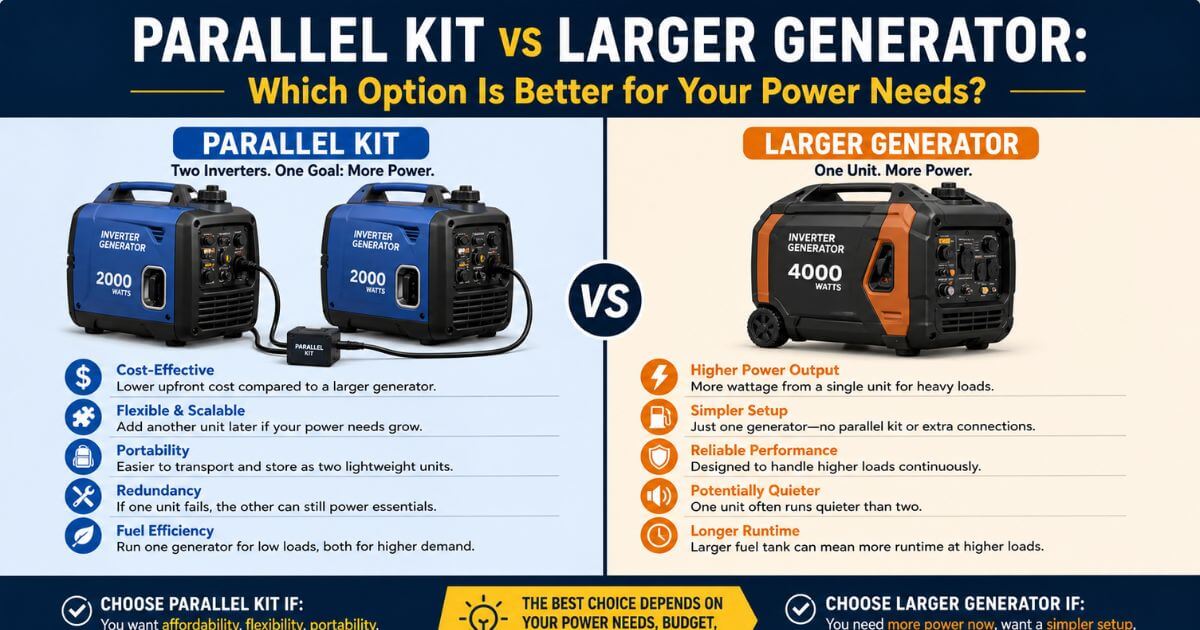
Parallel Kit vs Larger Generator: Which Option Is Better for Your Power Needs?
Buying a generator is a significant investment. One of the most common questions buyers ask is whether they should purchase two smaller inverter generators with a parallel kit or invest in one larger generator.
At first glance, both options can provide similar power output. However, they differ in portability, fuel efficiency, noise, maintenance, flexibility, and long-term value. Choosing the wrong setup may leave you spending more money than necessary or carrying equipment that doesn’t match your needs.
This guide compares both options in detail. You’ll learn how each system works, their advantages and disadvantages, and which choice makes the most sense for camping, RV travel, home backup, job sites, and emergency preparedness.
Key Takeaways
- Choose the option that best matches your typical power needs, budget, and intended use—not just the highest wattage.
- A parallel kit combines the power of two compatible inverter generators to increase available output.
- A larger generator delivers all its power from a single engine and alternator.
- Parallel setups are typically more portable, quieter, and easier to store.
- Larger generators are better suited for powering heavy electrical loads over extended periods.
- Using one generator for light loads can help reduce fuel consumption in a parallel setup.
- A single larger generator is generally simpler to maintain because it has only one engine.
- Always use a manufacturer-approved parallel kit with compatible generator models.
What Is a Parallel Kit?
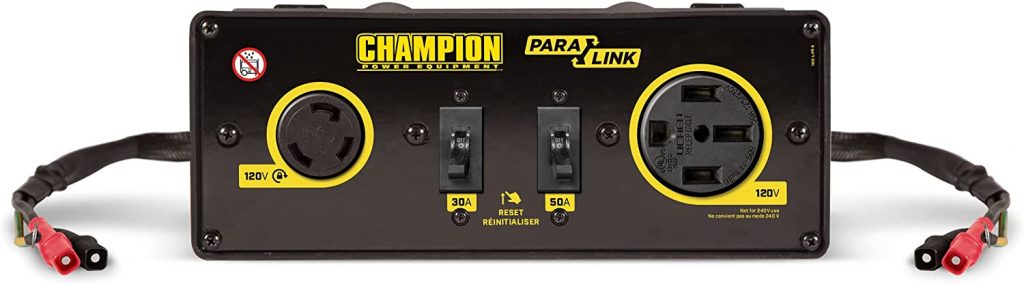
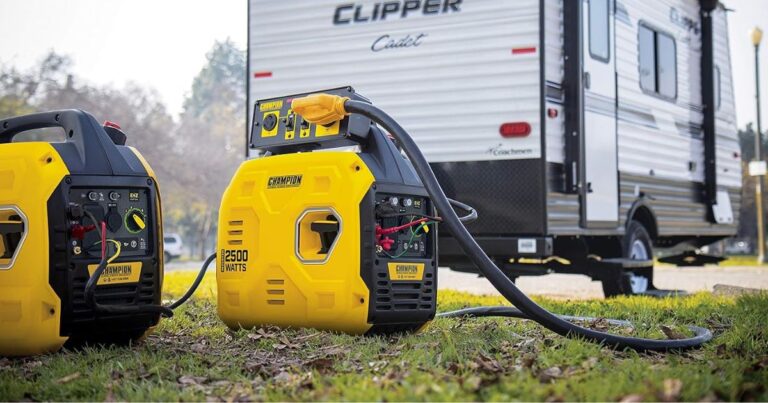
A parallel kit is a device that allows two compatible inverter generators to work together as a single power source.
Instead of relying on one generator, each generator produces electricity independently. The parallel kit safely combines their electrical output, increasing the total available wattage.
For example:
| Generator Setup | Running Watts | Starting Watts |
| One 2,200-watt inverter generator | 1,800W | 2,200W |
| Two identical generators with a parallel kit | 3,600W | 4,400W |
This additional power lets you operate larger appliances without buying a heavier generator.
Most manufacturers require both generators to be the same model or specifically approved for parallel operation. Mixing different brands or incompatible generators can damage the equipment. Check the best parallel kits by different brands.
How Does Generator Parallel Operation Work?
When connected with a compatible parallel kit, both inverter generators synchronize their electrical output.
The generators automatically match:
- Voltage
- Frequency
- Phase
Because inverter generators create electricity electronically, they can synchronize very accurately before combining power.
Once connected, your appliances draw electricity from both generators at the same time.
Instead of one generator carrying the entire electrical load, both units share the workload. This reduces stress on each engine and helps maintain stable power delivery.
Many parallel kits also include additional outlets such as:
- 30-amp RV outlet
- 120V household outlets
- Circuit breakers
- Overload protection
The process is simple:
- Start both generators.
- Connect the parallel cables.
- Plug appliances into the parallel kit instead of directly into the generators.
Within seconds, both machines operate as one larger power source.
What Is a Larger Generator?
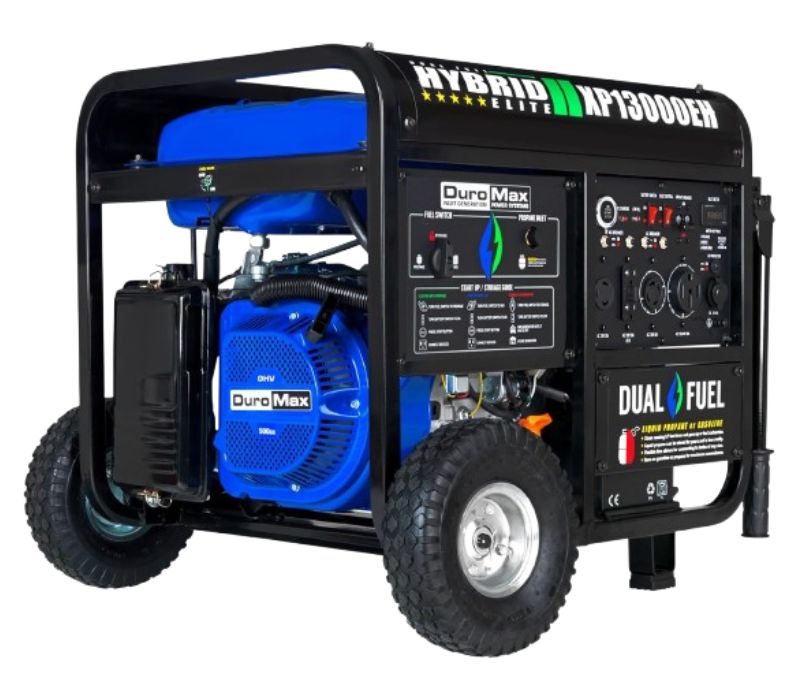
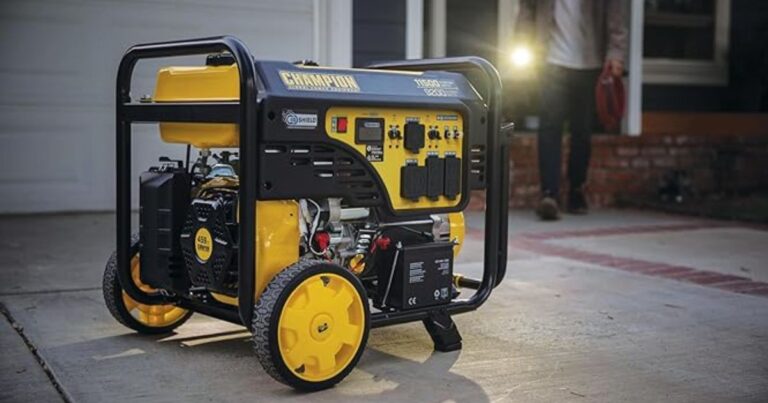
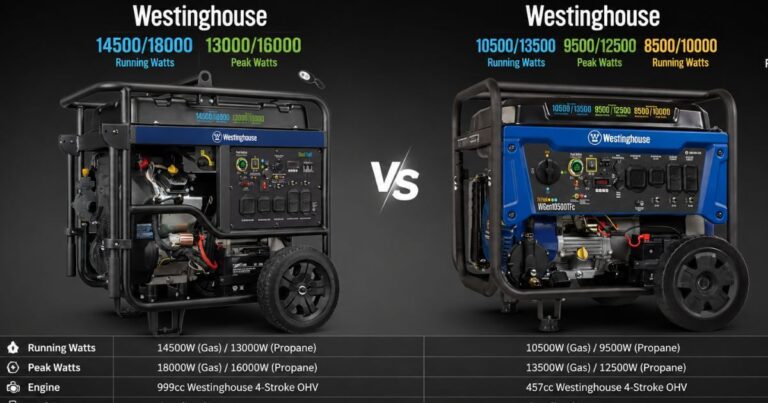
A larger generator is a single unit designed to produce higher electrical output without requiring another generator.
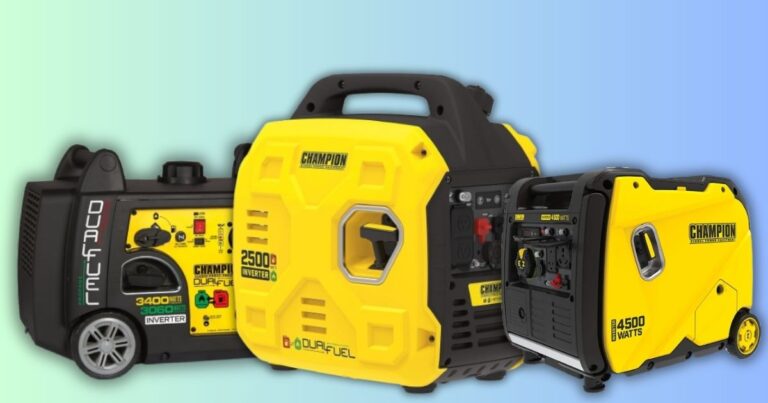
These generators are available in both conventional and inverter models.
Examples include:
- 4,500-watt inverter generators
- 7,500-watt portable generators
- 9,500-watt home backup generators
- 12,000-watt dual-fuel generators
Unlike parallel systems, all power comes from one engine and one alternator.
Larger generators are commonly used for:
- Whole-home backup
- Construction equipment
- Large RV air conditioners
- Workshops
- Farms
- Small businesses
Many larger generators include larger fuel tanks, electric start systems, transfer switch compatibility, and higher-capacity outlets.
Although they provide more power from a single machine, they are usually much heavier and more difficult to transport.
Parallel Kit vs Larger Generator: Quick Comparison
| Feature | Parallel Kit | Larger Generator |
| Initial Cost | Often lower if buying one generator first | Higher upfront investment |
| Portability | Excellent | Limited |
| Weight | Split between two generators | One heavy unit |
| Storage | Flexible | Requires more space |
| Noise | Usually quieter | Often louder |
| Fuel Efficiency | Better under light loads | Better for constant heavy loads |
| Maintenance | Two engines to maintain | One engine to maintain |
| Expandability | Easy to add second generator later | No expansion available |
| Home Backup | Moderate | Excellent |
| Camping & RV | Excellent | Usually too large |
| Heavy Equipment | Limited | Better choice |
At first glance, a parallel kit appears to offer the best of both worlds. However, the right choice depends on how and where you plan to use your generator. In the next section, we’ll compare each option in detail, including power output, fuel consumption, portability, operating costs, reliability, and long-term value.
Parallel Kit vs Larger Generator: Detailed Comparison
Choosing between a parallel generator setup and one larger generator involves more than comparing wattage. The way you use your generator has a big impact on which option offers the best value.
Let’s compare the most important factors.
1. Power Output
Power output is usually the first thing buyers consider.
A larger generator delivers all of its rated power from a single engine. If you buy a 7,500-watt generator, you can use nearly that entire capacity whenever needed.
A parallel setup combines the output of two smaller inverter generators. For example, two 2,500-watt inverter generators may provide around 4,500–5,000 running watts together, depending on the model.
For moderate household loads, RVs, or outdoor events, this is often enough. However, if you need to run several high-wattage appliances at once, a larger generator has a clear advantage.
Parallel kits are best for:
- Refrigerators
- Freezers
- RV air conditioners
- Televisions
- Lights
- Computers
- Small power tools
Larger generators are better for:
- Central air conditioners
- Well pumps
- Electric water heaters
- Large air compressors
- Multiple power tools
- Whole-home backup
Winner: Larger generator for maximum power.
2. Portability
This is where parallel systems shine.
Many inverter generators weigh between 40 and 60 pounds. Most people can carry one without assistance.
If you own two units, you can transport them separately. This makes loading them into a truck, RV, or storage compartment much easier.
A large generator, on the other hand, can weigh well over 200 pounds. Even models with wheels may require two people to lift into a vehicle.
If you frequently move your generator, weight quickly becomes an important factor.
Winner: Parallel kit.
3. Flexibility
A parallel setup offers more flexibility than a single larger generator.
You don’t always need maximum power.
For light-duty jobs, you can run just one generator. This reduces fuel consumption, noise, and engine wear.
When extra power is needed, simply connect the second generator using the parallel kit.
A larger generator doesn’t offer this option. Even when you’re powering only a few small devices, the entire generator must operate.
This makes parallel systems especially attractive for RV owners, campers, and homeowners who have changing power needs.
Winner: Parallel kit.
4. Fuel Efficiency
Fuel efficiency depends on the electrical load.
A large generator operates most efficiently when carrying a moderate percentage of its rated capacity. Running it at a very light load often wastes fuel.
With a parallel setup, you can use only one generator during light loads. If demand increases, you can start the second unit.
This allows you to match power production more closely to actual electricity use.
However, if you’re running heavy loads continuously for many hours, one properly sized larger generator may consume less fuel than two smaller engines working hard. Also read How Much Fuel Does a Generator Use Per Hour?
Parallel kit performs better when:
- Camping
- RV travel
- Weekend use
- Occasional backup power
Larger generator performs better when:
- Continuous heavy loads
- Construction sites
- Whole-home backup
- Long power outages
Winner: Tie, depending on usage.
5. Noise Level
Noise can make a big difference, especially in campgrounds and residential neighborhoods.
Most inverter generators are designed with enclosed cases, advanced mufflers, and Eco Mode. Running a single inverter generator under a light load is usually very quiet.
Even when both generators are operating together, the combined noise is often lower than that of a large conventional generator producing the same amount of power.
Large inverter generators are quieter than conventional models, but they are still generally louder than one small inverter generator operating alone.
Winner: Parallel kit.
6. Reliability
Many people assume two generators mean twice the chance of something going wrong. In reality, having two generators can also provide an important backup.
If one generator develops a problem, the other can still produce electricity for essential appliances.
With one large generator, a mechanical failure means you lose all available power until it is repaired.
That said, a parallel setup has more components, including:
- Two engines
- Two alternators
- Two fuel systems
- Parallel cables
- Additional electrical connections
Each part must be maintained properly.
Overall, both systems are reliable when serviced regularly.
Winner: Slight advantage to the parallel kit because it provides redundancy.
7. Maintenance Requirements
Maintenance is another cost many buyers overlook.
A single larger generator has only one engine to service. You’ll have one oil change schedule, one air filter, one spark plug, and one fuel system to maintain.
With a parallel setup, every maintenance task must be performed on both generators. Although each generator is smaller, the total maintenance takes more time and costs slightly more over the life of the equipment.
If you prefer the simplest maintenance routine, a larger generator is the easier option.
Winner: Larger generator.
8. Purchase Cost
The upfront cost depends on what you already own and how much power you need.
If you’re buying everything from scratch, a parallel setup usually includes:
- Two compatible inverter generators
- A parallel kit
- Optional storage bags or covers
The total price can sometimes equal—or even exceed—the cost of one larger generator with similar power output.
If you already have a compatible inverter generator, adding a second unit is often more affordable than replacing it with a larger generator.
A larger generator often costs more initially, but it comes as a complete package with no additional accessories required.
Choose a parallel kit if:
- You already own one compatible inverter generator.
- You want to increase power gradually.
Choose a larger generator if:
- You need high power immediately.
- You don’t already own a generator.
Winner: Depends on your starting point.
9. Long-Term Operating Costs
Buying the generator is just the beginning. Ongoing fuel costs, regular maintenance, and occasional repairs all affect the total cost of ownership.
A parallel setup can reduce operating costs when your power needs vary. Running a single generator for light loads saves fuel and reduces engine hours.
A larger generator may consume more fuel when powering only a few small appliances. However, if it’s used close to its intended capacity, it can be more efficient than running two smaller generators together.
Repair costs also differ. If one generator in a parallel setup fails, you only repair that unit. If a major component fails in a larger generator, the repair can be more costly than replacing or repairing one smaller generator in a parallel setup.
There is no universal winner. Operating costs depend on how often you use the generator and the type of loads you run.
10. Storage and Transportation
Storage is often overlooked until it’s time to move or store the generator.
Two compact inverter generators are easier to fit into:
- RV storage compartments
- Pickup trucks
- SUVs
- Garage shelves
- Storage closets
You can also carry them one at a time, which is helpful if you’re working alone.
A larger generator requires more floor space and may not fit inside smaller vehicles. Even models with folding handles and wheels can be difficult to load because of their weight.
If you travel frequently or have limited storage space, a parallel setup is usually the more practical option.
Winner: Parallel kit.
11. Expandability
A parallel system allows you to increase your power capacity over time.
For example, you might buy one 2,500-watt inverter generator today for camping and occasional home use. Later, if your needs grow, you can purchase a second compatible generator and connect them with a parallel kit.
This spreads the investment over time instead of paying for maximum power upfront.
A larger generator does not offer this flexibility. If you outgrow it, the only solution is to replace it with an even larger model.
Winner: Parallel kit.
12. Which Option Is Safer?
Both options are safe when used correctly, but each has different considerations.
A parallel setup requires proper connection procedures. Always use a manufacturer-approved parallel kit and follow the instructions. Connecting incompatible generators or using homemade wiring can damage the generators and create safety hazards.
A larger generator eliminates the need for parallel cables, but it still requires safe operation. Proper grounding (when required), correct extension cords, adequate ventilation, and routine maintenance remain essential.
Regardless of which option you choose:
- Never operate a generator indoors or in enclosed spaces.
- Keep the generator dry.
- Avoid overloading it.
- Use heavy-duty extension cords rated for the electrical load.
- Allow the generator to cool before refueling.
When operated according to the manufacturer’s instructions, both setups are equally safe.
Which Option Should You Choose?
Your decision should be based on the appliances you want to run, how often you’ll use the generator, and whether portability is important to you.
A Parallel Kit Is a Better Choice If You:
- Camp regularly.
- Travel with an RV.
- Need a lightweight generator.
- Already own one compatible inverter generator.
- Usually power small or medium loads.
- Want the flexibility to use one or two generators as needed.
- Prefer quieter operation.
Choose a Larger Generator If You:
- Need whole-home backup power.
- Frequently run high-wattage appliances.
- Power construction equipment.
- Require 240-volt output.
- Want a single machine instead of managing two generators.
- Expect long periods of continuous heavy use.
There isn’t a one-size-fits-all answer. Matching the generator to your typical power needs will give you the best performance and value.
Real-World Examples
Scenario 1: Weekend Camping
You need to power lights, charge phones, run a coffee maker, and occasionally use a portable air conditioner.
Best choice: Parallel kit.
One generator is enough for most of the trip, while the second can be added during periods of higher demand.
Scenario 2: RV Travel
An RV owner needs to run a 15,000 BTU air conditioner during the day but wants a lightweight setup for transportation.
Best choice: Parallel kit.
Two inverter generators are easier to move and usually quieter in campgrounds than one large conventional generator.
Scenario 3: Home Backup During Storms
A homeowner wants to power a refrigerator, freezer, sump pump, furnace blower, lights, and several household outlets for several days.
Best choice: Larger generator.
A single higher-capacity generator can manage multiple essential circuits more comfortably and often includes a larger fuel tank for longer run times.
Scenario 4: Construction Site
Workers need to operate air compressors, table saws, and other heavy-duty tools throughout the workday.
Best choice: Larger generator.
Continuous heavy loads are better handled by a generator designed for higher output and demanding job-site use.
Final Verdict
Both a parallel kit and a larger generator are reliable solutions, but neither is the right choice for everyone. The better option depends on your power requirements, budget, and how you plan to use the generator.
A parallel kit is ideal if you value portability, quieter operation, and the flexibility to adjust your power output. It’s an excellent fit for RV owners, campers, tailgaters, and anyone who only needs additional power occasionally. You can run a single generator for everyday tasks and connect a second one when demand increases.
A larger generator is the better investment if you regularly power high-wattage appliances or need dependable backup for a home, farm, workshop, or job site. With all the required power coming from one machine, it’s better suited for continuous heavy-duty use.
Before making a purchase, calculate the total wattage of the appliances you expect to run and consider factors such as portability, fuel consumption, storage space, and future power needs. Choosing a generator that matches your real-world usage—not simply the highest wattage—will provide better value, greater convenience, and more dependable performance over the long term.
Frequently Asked Questions
Can you connect any two generators with a parallel kit?
No. Only compatible inverter generators designed for parallel operation should be connected together. Most manufacturers recommend using the same model or specific approved combinations. Connecting incompatible generators can damage the electrical system and may void the warranty.
Does a parallel kit double the generator’s power?
It increases the available power, but it does not always double the usable output.
For example, two 2,000-watt inverter generators can provide close to 4,000 watts combined, but the exact running and starting wattage depends on the manufacturer’s specifications.
Is a parallel generator setup more fuel-efficient?
It can be.
If your power demand changes throughout the day, running one generator during light loads usually saves fuel. When demand increases, you can start the second generator.
For constant heavy loads, a properly sized larger generator may be just as efficient or even more efficient.
Can I run a house with two generators connected in parallel?
Yes, provided the generators are compatible for parallel operation and their combined output is enough for your essential appliances. A parallel setup can power items such as refrigerators, lights, fans, and other household essentials during an outage. If you’re connecting it to your home’s electrical system, always use a properly installed transfer switch or interlock kit and follow the manufacturer’s instructions for safe operation.
Are parallel kits only for inverter generators?
In most cases, yes.
Parallel operation is primarily designed for inverter generators because they electronically synchronize voltage and frequency before combining power.
Most conventional portable generators cannot be connected using a standard inverter generator parallel kit unless the manufacturer specifically states they support parallel operation.
Is it cheaper to buy two small generators instead of one large generator?
Not always.
If you already own one compatible inverter generator, adding a second unit is often more affordable than replacing it with a larger generator.
However, purchasing two new generators plus a parallel kit can cost as much as—or sometimes more than—a single larger generator with similar output.
Can two generators connected in parallel produce 240 volts?
It depends on the generator model.
Many small inverter generators connected in parallel provide only 120-volt output, even when their wattage is combined.
Some larger inverter generator systems are specifically designed to deliver 120/240-volt power when operated in parallel. Always check the manufacturer’s specifications before purchasing if you need to run 240-volt appliances such as well pumps, electric dryers, or central air conditioners.